2025. Another new year. Time to look back and see how God has been faithful in the past. Are you going through a difficult time? Is your future unsure? Be encouraged by the promises of God in His Word. Scripture is full of reminders that God delights in renewing the hearts and minds of His people.
31 but those who hope in the Lord
will renew their strength.
They will soar on wings like eagles;
they will run and not grow weary,
they will walk and not be faint. (Isaiah 40:31, NIV)
10 So do not fear, for I am with you;
do not be dismayed, for I am your God.
I will strengthen you and help you;
I will uphold you with my righteous right hand. (Isaiah 41:10, NIV)
17 Therefore, if anyone is in Christ, he is a new creation; old things have passed away; behold, all things have become new. (2Corinthians 5:17, NIV)
16 Therefore we do not lose heart. Though outwardly we are wasting away, yet inwardly we are being renewed day by day. (2 Corinthians 4:16, NIV)
God also delights in renewing His creation. Think of the seasons, the water cycle, and the life cycle of trees and flowers. Similarly, we as humans were created to be life-givers. Families are designed to bring new lives into the world, but every human’s individual body is also designed to bring new life within itself.
Humans are multicellular, complex organisms. The cells inside our bodies are “specialized.” According to recent research, an average person is estimated to contain roughly 30 trillion human cells classified into 200 different types. For example,
- red blood cells (erythrocytes)
- skin cells
- neurons (nerve cells)
- fat cells
Each of these types of cells performs a unique and special function. For this reason, each of the 200 different types of cells in the human body has a different structure, weight, and size. Within the body, some cells are packed more densely, while others are more spread out.
Most cells in the body will eventually die and need to be replaced. One exception is the cells in the brain and nervous system which will stay alive throughout a person’s life. The life cycles for the other body cells varies. For example, white blood cells only live for about 13 days, whereas red blood cells live for about 120 days. Liver cells, on the other hand, can live up to 18 months. Because the lifespan of each of the 200 types of cells varies considerably, not every type of cell is produced at an equal rate.
The human body was created by God to be capable of maintaining a precise balance between the number of cells produced and the number of cells that die. In this devotional, I will describe how the body produces two different types of cells, skin cells, and red blood cells.
SKIN CELLS
The upper layer of skin, the epidermis, is divided into five layers. The top layer of the epidermis is the stratum corneum. It is composed of dead skin cells filled with keratin, a protein also found in hair and nails. The stratum corneum breaks away and falls off allowing new cells to move up through the epidermis. If you look closely at the diagram below, you will note that the stratum corneum does not contain live cells.
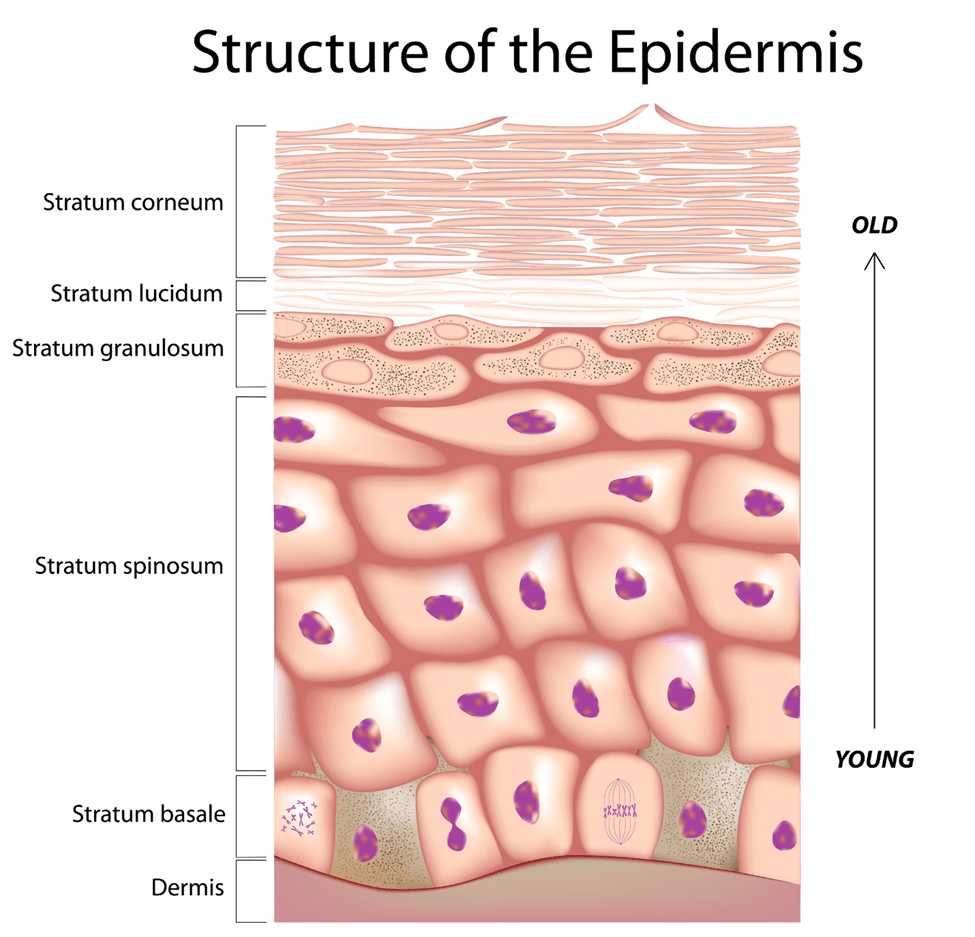
New cells are continuously being produced by stem cells in the stratum basale, which lies just above the dermis. New cells are produced by the process of mitosis (cell division). The five phases of mitosis are pictured below. After telophase, the shared cytoplasm is equally divided forming two new cells.
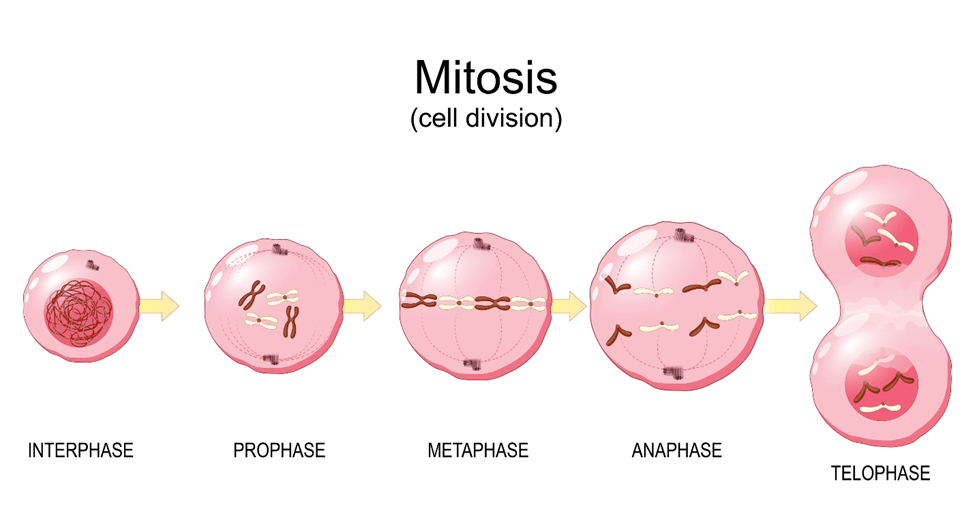
Take another look at the structure of the epidermis diagram. Note that the cells in the stratum basale are at different phases of mitosis. Once the new cells are produced, they migrate upward to replace cells that were lost. The epidermis is continually renewed with an average turnover time of about one month.
RED BLOOD CELLS
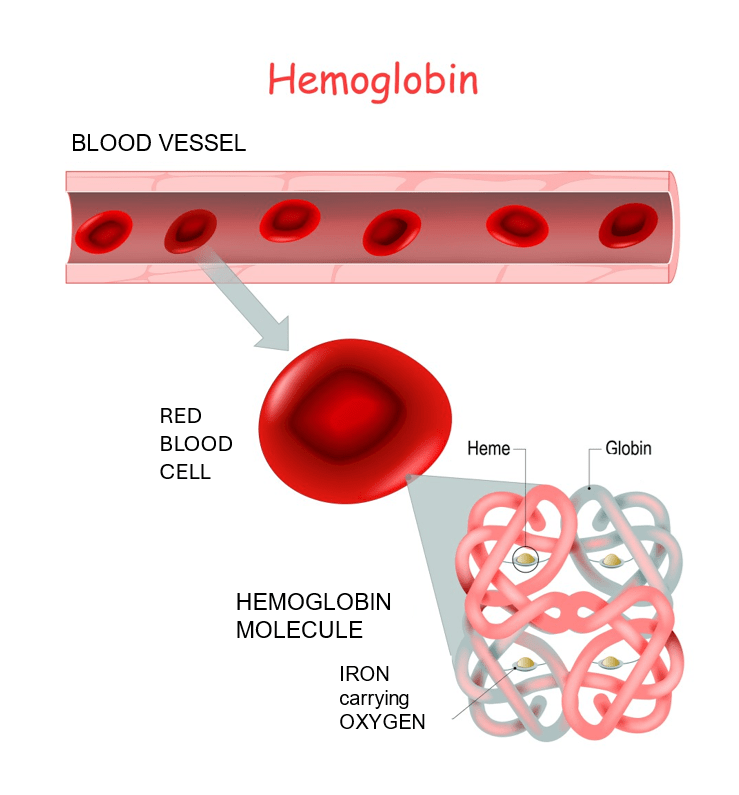
Red blood cells cannot undergo cell mitosis (cell division). This is because they are anucleate: they have no nucleus. This allows more room for the red blood cells to carry the important protein hemoglobin, increasing the ability of red cells to carry oxygen. Each red blood cell contains several hundred million molecules of hemoglobin. One molecule of hemoglobin contains four heme groups, and each heme group can bind to one oxygen molecule. That adds up to an abundant supply of oxygen in the blood!
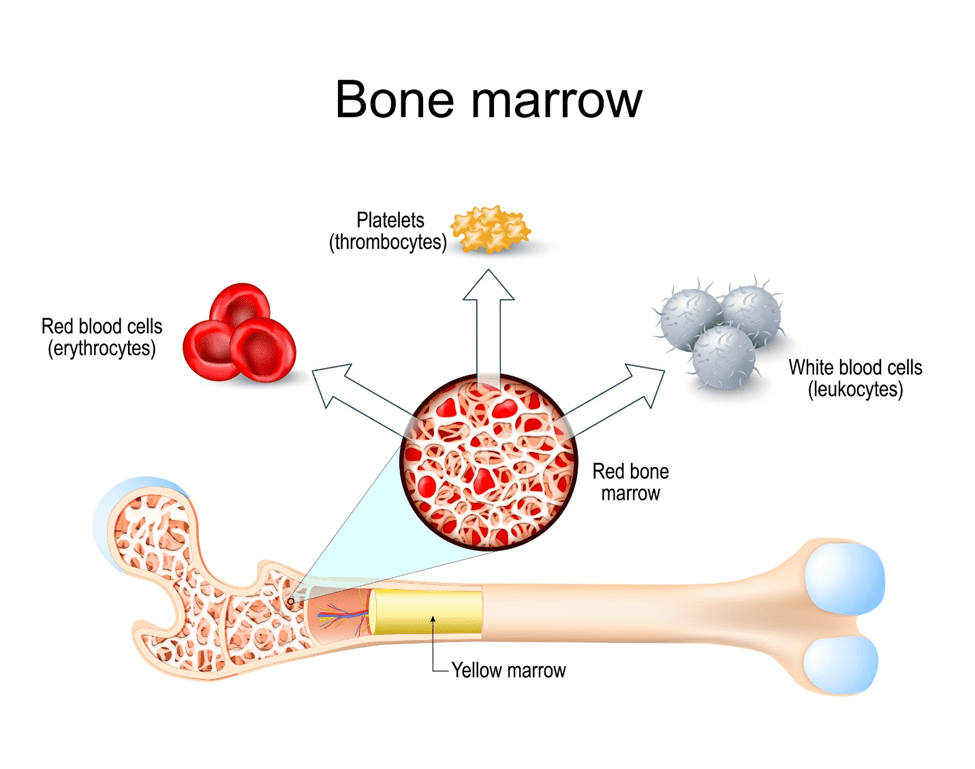
There are two types of bone marrow, red and yellow. Yellow bone marrow is located in the shaft of long bones. It contains stem cells that produce cartilage, fat, and bone.
Red bone marrow is primarily located in the cavities of flat bones like the pelvis, sternum (breastbone), skull, ribs, and the spongy ends of long bones. Its function is to produce blood cells – red blood cells, white blood cells, and platelets.
Healthy bone marrow produces blood cells by the process of hematopoiesis. Through this process, stem cells in the red bone marrow produce red blood cells, white blood cells, and platelets. These cells are released into the bloodstream when they are mature and when required.
Red blood cells normally live for 110 to 120 days. After that, they naturally break down and are most often removed from the circulation by the spleen. The body constantly produces new red blood cells to replace those that are dying.
Recall the verses from the very beginning of this post. God desires to renew us in every way, not just physically (as incredible as that is!). He longs for us to be whole and complete. While our bodies are designed to automatically renew themselves in many ways, total renewal takes effort on our part. We care for our bodies through healthy food choices and exercise, and we care for our minds and spirits by meditating and applying God’s word in our lives. Find a few verses you can keep with you for encouragement throughout the day, and rest in the fact that God longs to renew you. He has taken care of every detail!
3 For you created my inmost being;
you knit me together in my mother’s womb.
14 I praise you because I am fearfully and wonderfully made;
your works are wonderful,
I know that full well.
15 My frame was not hidden from you
when I was made in the secret place,
when I was woven together in the depths of the earth.
16 Your eyes saw my unformed body;
all the days ordained for me were written in your book
before one of them came to be. (Psalm 139: 13-16, NIV)
ID 28721116 | Anatomy © Alila07 | Dreamstime.com
ID 239570460 | Anatomy © Designua | Dreamstime.com
ID 185246707 | Anatomy © Designua | Dreamstime.com
ID 311194120 | Anatomy © Designua | Dreamstime.com

 Fearfully and Wonderfully Made