BLOG Oct. 2, 2020
For you formed my inward parts, you knitted me together in my mother’s womb. (Psalm 139:13 ESV)
When I read this verse it reminded me of the time during my high school teaching career when I was asked to teach human anatomy and physiology instead of general biology. I accepted this challenge knowing that it would change my teaching style from biological survey information to specific, detailed information about the human body.
My first challenge was histology, the study of tissues that form organs. I would no longer just teach that body movement is possible because of muscles that are attached to the bones. I would teach how the structure of skeletal muscle tissue makes movement possible. I needed to take my knowledge deeper in order to teach the inward parts of the human body.
So I began by studying prepared slides of different tissues under the microscope. I took a prepared slide of skeletal muscle tissue out of the slide box. I placed the slide on the microscope stage and focused it on low power, then medium power, then high power. As I viewed the skeletal tissue down to its inward parts, I was mesmerized! I continued studying slides of different types of tissue. With each slide I discovered structural patterns that explained how their respective organs performed.
Skeletal muscle
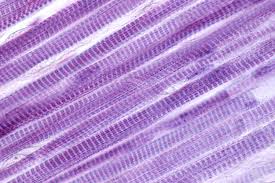
Why does skeletal muscle tissue look like bundles of ropelike fibers? Muscles are attached to the bone by tendons. The contraction of the muscle leads to movement of the bone, allowing it to perform a specific movement. For example, muscles move the lower jaw to open and close your mouth when chewing an apple. Can you imagine a rope tied to your jaw performing the same movement?
Red blood cells in blood tissue
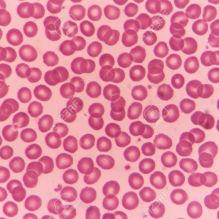
Why are red blood cells, which make up 40% of blood tissue shaped like flexible oval discs? Red blood cells do not have a nucleus to maximize space for hemoglobin. Red blood cells are sacks of hemoglobin which transports and delivers oxygen to all the body’s tissues. Their flexibility allows them to travel in the blood through arteries and capillary beds. What if red blood cells were rectangular and rigid?
Bone tissue
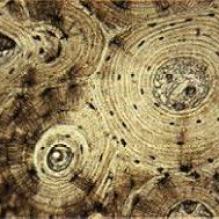
Why is compact bone arranged in concentric circles? This arrangement produces dense compact bone tissue that provides protection and strength to the bone. How would your life be different if your bones consisted of one or two layers of bone tissue? Where in nature do you see this same pattern? Tree rings? Tree limbs are large tree branches. Arms and legs of humans are limbs.
Nervous tissue
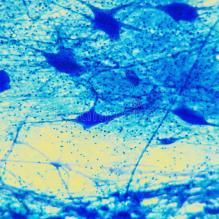
And finally, why is nervous tissue made up of a web like mass of nerve cells, connected one to the other with fibrous extensions? Nervous tissue relays messages to and from the brain. The fibers that carry messages away from the nerve cell are called axons? Where do you think the longest axons are located in the human body? In the nerve cells of the sciatic nerve, which runs from the base of the spinal cord to the big toe of each foot.
These are just four of the many types of tissues that form the human body. I hope you sense the wonder of the many creative patterns of over 30 trillion cells which were knitted together to form tissues to form organs to form organ systems and ultimately you!
13 For you formed my inward parts;
you knitted me together in my mother’s womb.
14 I praise you, for I am fearfully and wonderfully made.
Wonderful are your works;
my soul knows it very well. (Psalm 139:13-14 ESV)

 Fearfully and Wonderfully Made
Beautiful The picture are very explanatory of every tissue I liked a lot I’m learning a lot Congrats Blessings
Sent from my iPhone
>
LikeLike
Thank you! So glad you liked my devotional.
LikeLike
Peggy, Human anatomy was my favorite part of chiropractic school! I love studying how we are made. Truly a miracle! Sue Adkins
LikeLike
Yes it is! I’m glad you had the opportunity to study the human body in depth! Thank you for commenting.
LikeLike
Hi Peg,
The nurse & Christian both appreciated this month’s blog!
Love,
Gaile
LikeLike
We think and believe alike on at least these two truths!! Love, Peg
LikeLike