2 Do not conform to the pattern of this world, but be transformed by the renewing of your mind. Then you will be able to test and approve what God’s will is—his good, pleasing, and perfect will. (Romans 12:2NIV)
The Apostle Paul is writing to the Jewish and Gentile Christians in Rome. He has tried many times to visit them but has been prevented. His plan is to visit Rome, preach the Gospel and then continue to carry the Good News to Spain. The Christians are meeting in several house churches in Rome. Even though their lives have been drastically changed by hearing the Good News and following Jesus’ teachings, their environment in the city has not changed. They are living amidst practices of ceremonies and sacrifices of the Mosaic Law as well as idol worship.
Paul is encouraging the new believers to no longer be conformed to the culture they see around them. He exhorts them to be regenerated and created anew, by the renewing of their minds. With a renewed mind of Christ, the believers’ thoughts, behaviors, actions, and motives will be clean. By getting rid of the old thoughts and opening their minds to the Holy Spirit they will discern what is good and acceptable to God, no longer judging but loving unconditionally, and serving others before themselves.
Was Paul simply using a figure of speech, or is it really possible to “renew” our minds? It was once believed that as we aged, the brain’s networks became fixed. In the past two decades, however, an enormous amount of research has revealed that the brain never stops changing and adjusting. God did not create us with static, fixed brains. The brain has neuroplasticity, the ability to reorganize by creating new pathways. The term neuroplasticity comes from two root words: “neuron” – in this case, neurons of the brain – and “plastic.” Plastic means to mold, sculpt or modify.
Neuroplasticity describes how our life experiences and learning change the nerve pathways in the brain. Long lasting functional changes in the brain occur when we learn new things or memorize new information. During normal brain development, when the child’s brain first begins to process sensory information, a process known as developmental plasticity and plasticity of learning and memory occurs.
Neurons receive information from other neurons through numerous dendrites. The information is processed in the nucleus and then transmitted out of the neuron via the singular axon. Chemical neurotransmitters carry the information across the gap between the axon and dendrites of another neuron. In the case of brain repair following a stroke or traumatic brain injury, the damaged neurons revert to an embryonic state. They are now capable of re-growing new connections, that under the right conditions restore lost function. Looking at the picture below, let your imagination think about how the structure of the neuron and its network arrangement can work together through neuroplasticity to repair brain damage.
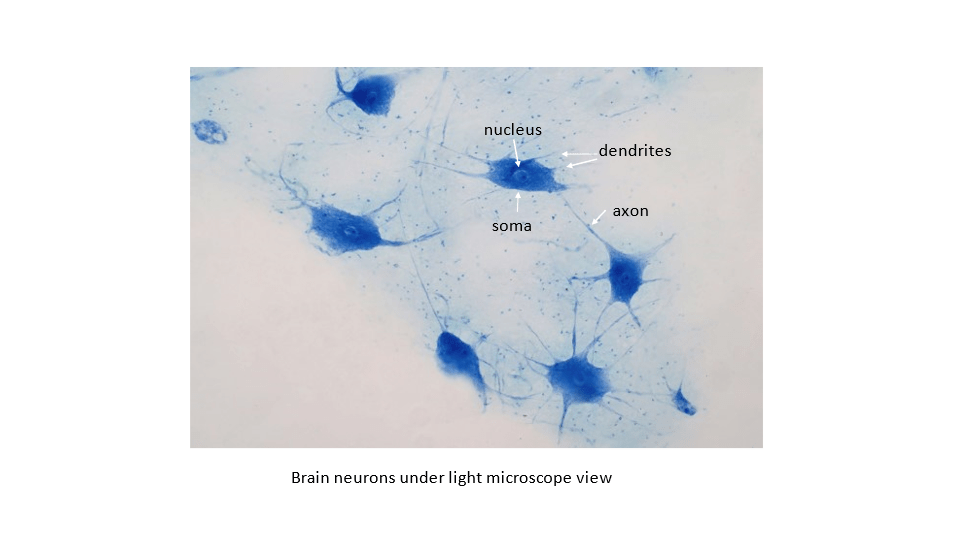
All cells of the body require oxygen and nutrients delivered by blood. When the major arteries that supply the brain with blood are blocked or severed, cell death occurs. The patient experiences loss or changes in whatever the damaged region controls: speech, balance, reasoning, movement. Damage to the right side of the brain affects the muscle control of the left side of the body and vice versa.
Brain Regions and Functions
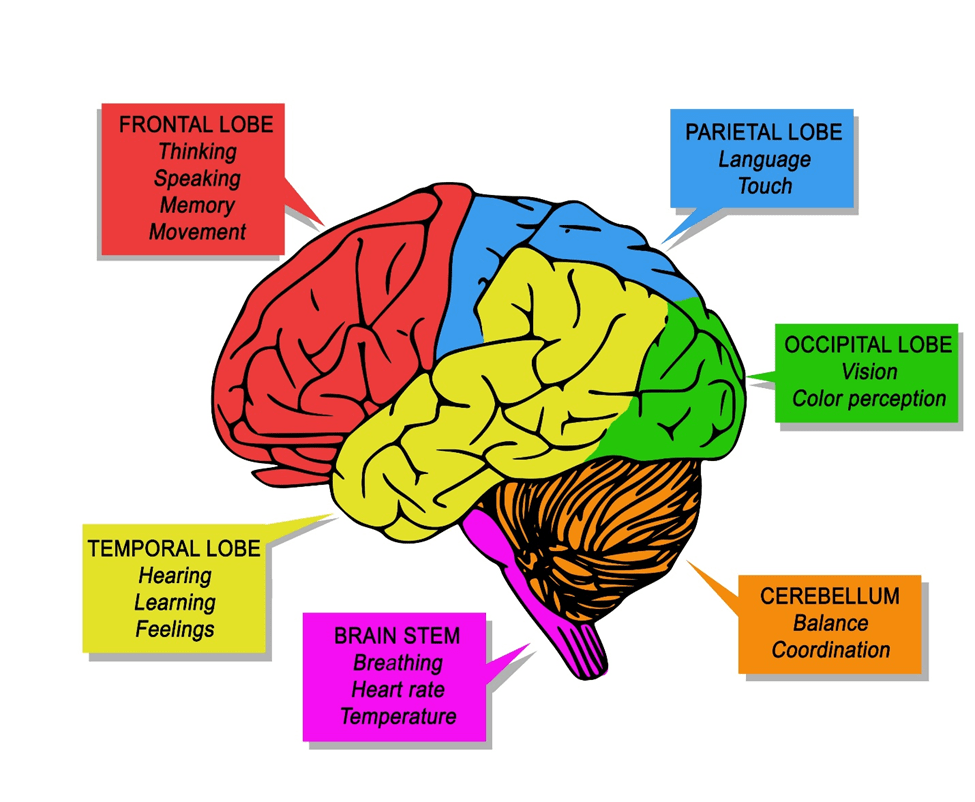
When the brain is injured, the patients often go into a coma. Sometimes the doctor will put them into a drug-induced coma. Why? Inducing a coma allows the brain to rest by decreasing the brain’s electrical activity and metabolic rate. This state helps decrease brain swelling and protects the brain from further damage.
When doctors feel that the patient’s brain has rested long enough, doctors encourage relatives to talk to their loved one. Saying the patient’s name and describing an important event in the past can awaken the region of the brain where the long- term memories are stored. When the patient is under an MRI, lights appear in the brain regions involved with understanding language and long-term memory. Blood oxygen levels increase indicating that the patient is using these parts of the brain.
The time a patient spends in a coma, the severity and location of brain damage and the timeline of recovery differs in every patient. Patients also receive encouragement from physical therapy, relearning simple motor activities such as walking, sitting, standing, lying down, and the process of switching from one type of movement to another. This is followed by more specific motor movements like writing, feeding themselves, and personal hygiene activities like brushing teeth and hair. Speech therapy helps the patient relearn how to speak and comprehend what is said. Healing is a process that can take months to years. Encouragement from the medical community and the family definitely makes a difference in the outcome.
I leave you with Scripture from a letter written by the Apostle Paul to the Philippians. Paul was in prison in Ephesus when he penned these words. What a clear example of someone whose mind had been renewed after his conversion on the road to Damascus (Acts 9:1-22.) Paul was transformed from his previous life of persecuting Christians to his new life of preaching the Good News, planting churches, and encouraging Christians. In Paul’s own words, “20 I have been crucified with Christ and I no longer live, but Christ lives in me. The life I now live in the body, I live by faith in the Son of God, who loved me and gave himself for me.” (Galatians 2:20).
“1Therefore, if you have any encouragement from being united with Christ, if any comfort from his love, if any common sharing in the Sprit, if any tenderness and compassion,2 then make my (Apostle Paul) joy complete by being like-minded, having the same love, being one in spirit and of one mind. 3Do nothing out of selfish ambition or vain conceit. Rather, in humility value others above yourselves, 4not looking to your own interests but each of you to the interests of the others Each of you should look not only to your own interests, but also to the interests of others. 5 In your relationships with one another, have the same mindset as Christ Jesus.” (Philippians 2:1-5 NIV)
Photo 227313499 / Brain Neuron Microscope © Puntasit Choksawatdikorn | Dreamstime.com
Illustration 106726571 / Brain © Fabio Iozzino | Dreamstime.com

 Fearfully and Wonderfully Made
Thank you. You know I love the insights even if I don’t understand all the depth that you give us. For example, the picture of the brain cells? I can’t tell how they are compensating for the damage. But that is marvelous that they do. Fearfully and wonderfully we are made!
On Tue, Jan 18, 2022 at 3:23 PM Fearfully and Wonderfully Made wrote:
> peggywelch851 posted: ” 2 Do not conform to the pattern of this world, but > be transformed by the renewing of your mind. Then you will be able to test > and approve what God’s will is—his good, pleasing, and perfect will. > (Romans 12:2NIV) The Apostle Paul is writing to the” >
LikeLike