33 “This is the covenant I will make with the people of Israel
after that time,” declares the Lord.
“I will put my law in their minds
and write it on their hearts.
I will be their God,
and they will be my people. (Jeremiah 31:33, NIV)
This scriptural passage announces God’s promise of a “new covenant” by the prophet Jeremiah. Unlike the old covenant written on stone tablets, this new covenant will be inscribed on people’s hearts and minds, leading to an inner desire to obey, not just outward constraint. This internal transformation ensures God will truly be their God, and they will truly be His people, culminating in genuine fellowship and lasting forgiveness.
Similarly, the author of the book of Proverbs describes the importance of “writing God’s words on your heart.” By this, you will gain wisdom:
3 My son, do not forget my teaching,
but keep my commands in your heart,
2 for they will prolong your life many years
and bring you peace and prosperity.
3 Let love and faithfulness never leave you;
bind them around your neck,
write them on the tablet of your heart.
4 Then you will win favor and a good name
in the sight of God and man. (Proverbs 3:1-3, NIV)
Have you ever sat down to write something and discovered that you couldn’t quite find the words? Or maybe you’ve always been told that your handwriting is difficult to read. As it turns out, both the mental and physical acts of writing are an incredibly intricate, complicated process involving multiple parts of your brain. No wonder that most of us wrestle with at least some aspect of writing. There’s a lot happening inside your brain!
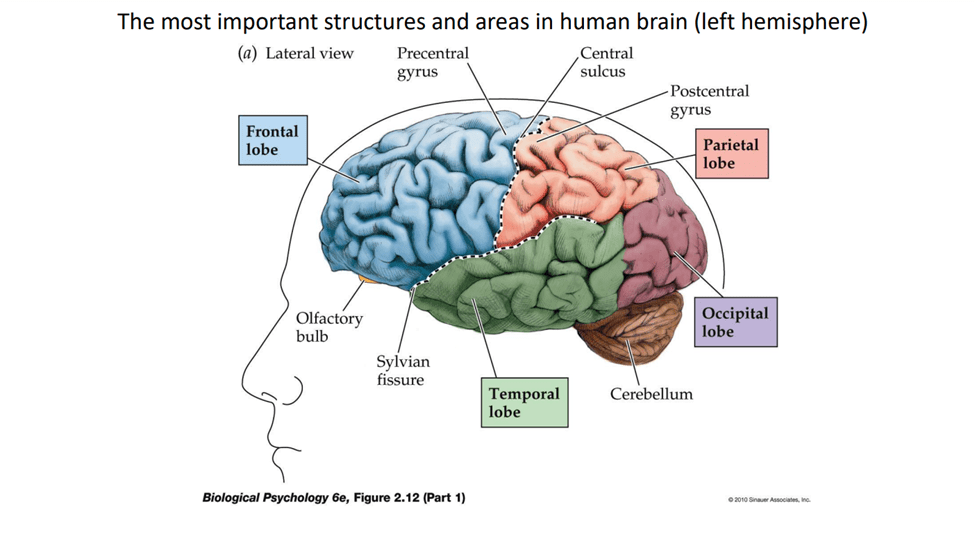
Writing – from a mental standpoint (idea generation and organization) – engages a complex network of brain regions in the frontal, parietal, and temporal lobes, primarily in the left hemisphere for most people. This process is broken down into idea generation, language formulation, and motor execution, each relying on a different set of brain areas.
Idea generation and planning
- Frontal lobe: As the control center for voluntary actions, the frontal lobe manages the high-level planning and reasoning that determines the content and structure of a piece of writing.
- Hippocampus: This region is crucial for memory retrieval, allowing you to access and recall past events, facts, and ideas to inform your writing.
Language processing
- Broca’s area: Located in the left frontal lobe, Broca’s area is essential for language production. It translates thoughts into grammatically correct and coherent sentences, both spoken and written.
- Wernicke’s area: Situated in the left temporal lobe, Wernicke’s area is responsible for language comprehension. It allows you to understand the meaning of the words and sentences you write. It is also important for revision, as it helps you compare what you wrote with what you intended to say.
- Angular gyrus: This area integrates visual, auditory, and other sensory information to process language. It is critical for associating a perceived word with its corresponding meaning, and damage to it can cause writing impairments (agraphia).
- Fusiform gyrus: Particularly important for handwriting, the left fusiform gyrus is involved in visual word recognition and orthographic coding (the written form of words).
When it comes to the physical act of writing by hand, there are other areas of the brain that are hard at work.
Motor control
- Exner’s area: A specialized region in the left frontal lobe, Exner’s area stores the “motor memory” for the precise hand and finger movements required for handwriting.
- Premotor cortex: This area is responsible for motor planning and prepares the hand and finger movements before the physical act of writing or typing.
- Motor cortex: The motor cortex is a strip at the back of the frontal lobe that sends signals to the muscles to execute the hand movements required to form letters or press keys.
- Cerebellum: This region helps coordinate and regulate the motor movements necessary for writing. It is particularly active in handwriting, contributing to the fluidity of the motion.
- Superior parietal cortex: This area handles the spatial processing required to control the size, shape, and placement of letters on a page.
Lastly, there are differences between handwriting and typing. Research using fMRI has shown that handwriting activates a more extensive network of brain regions compared to typing. This is why many teachers are encouraged to promote handwritten notetaking in class rather than having students type out or dictate their notes.
- Handwriting engages additional areas related to motor control, sensory feedback, and memory, leading to more complex neural connections.
- Typing involves a less complex motor skill and therefore activates a smaller network of brain regions. This difference may explain why handwriting is associated with better memory retention and learning compared to typing.
When it comes to “writing God’s word on your heart,” memorizing God’s word has the power to influence your thinking and point of view in all circumstances. Some people also find journaling about Scripture – whether handwritten or typed – another helpful tool to combat negative thinking. However whatever method you choose to write the words, we can all marvel at the wondrous, complex processes our brain performs each time we engage with Scripture. Thanks be to God that He has given us so many ways to write His words on our hearts!
https://dev.taleafrica.com/addread/writing-as-a-motor-function-and-its-brain-mechanisms

 Fearfully and Wonderfully Made
Thank you for sharing.
Yahoo Mail: Search, Organize, Conquer
LikeLike
You are welcome!! I hope you and Jan are doing well.
LikeLike